How to prevent and put out a stovetop grease fire
Updated . By the OakTend team.
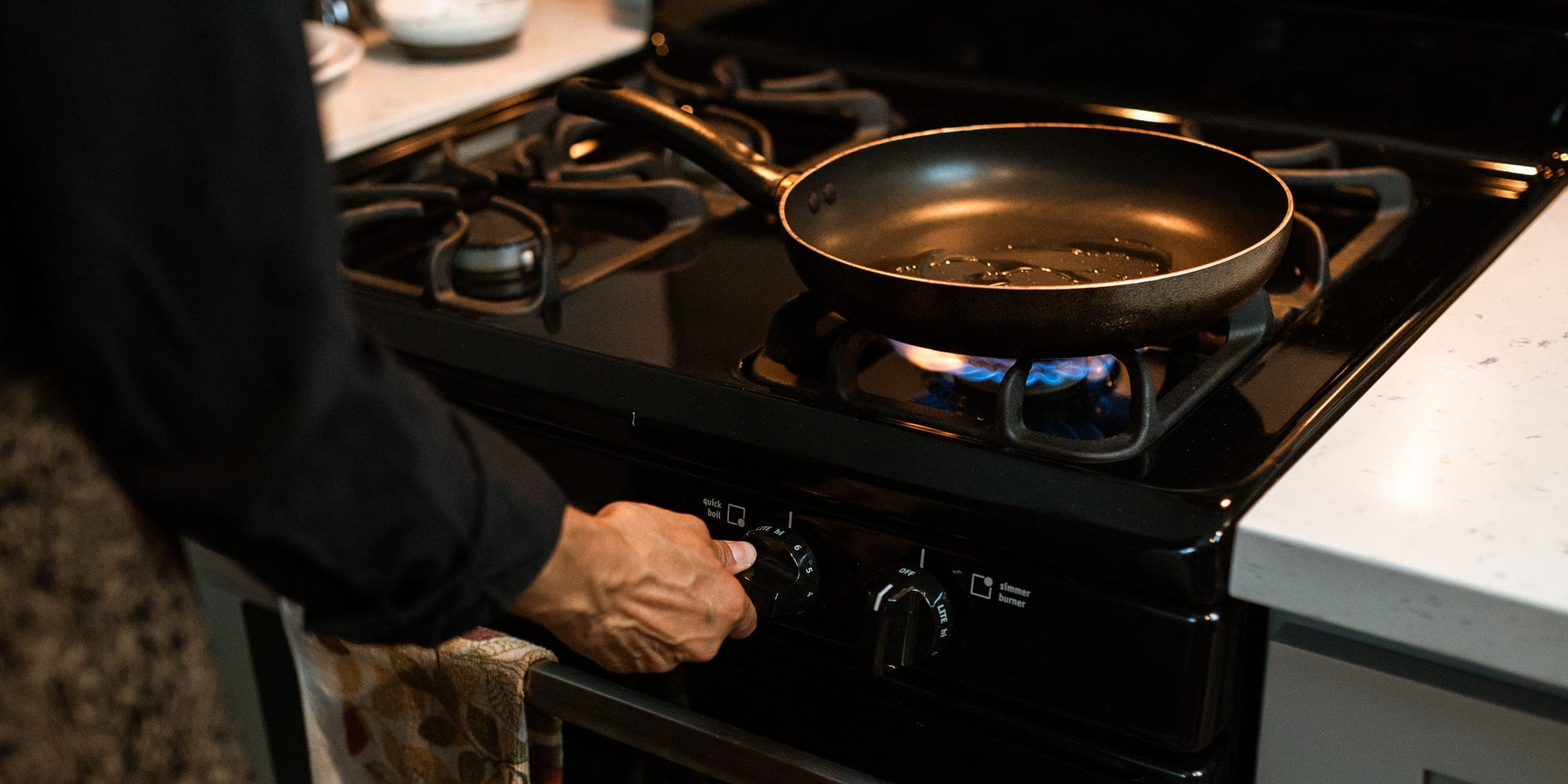
A small fire in a pan on the stove, usually oil or grease that got too hot. Most are preventable, and the right first move puts one out in seconds.
Why it matters
The U.S. Fire Administration says cooking is by far the leading cause of home fires and home fire injuries, and that the leading factor in cooking fires that spread beyond the pan was equipment left unattended, at 37 percent.
Steps
- Stay with the pan while you fry or sear. If you leave the kitchen, turn the burner off.
- Keep the heat moderate. If the oil starts to smoke, it is too hot: turn it down.
- Turn pot handles toward the back of the stove so nobody bumps them.
- If the pan catches fire, slide the lid or a baking sheet over it to smother the flames.
- Turn off the burner and leave the lid on until the pan is completely cool.
- Never carry a burning pan, and never pour water on burning grease.
- If the fire is not out in seconds or spreads past the pan, get everyone out, close the door behind you and call 911 from outside.
When to call a pro
Call the fire department for any fire you cannot smother right away. If flames reached the hood or cabinets, have the range and hood checked before you use them again.
Safety
Water makes burning oil splatter and spread. Our extinguisher how-to covers when it is safe to use one and how.
General information, not professional advice. Your equipment's manual comes first when it says something different.
Sources
- U.S. Fire Administration: cooking fire safety
Cooking is the leading cause of home fires and fire injuries; unattended equipment (37 percent) was the leading factor in nonconfined cooking fires; stand by your pan and turn the burner off if you leave; fires start when the heat is too high; turn handles to the back; cover a burning pan with a lid or baking sheet. - U.S. Fire Administration: fire extinguishers
A-B-C extinguishers for most home fires, and when it is safe to use one.