Orange County home maintenance checklist, month by month
Updated . By the OakTend team.
There is no snow to plan around in OC, so the year runs on four local things: Santa Ana winds, the first rains, the marine layer and hard water. General information, not professional advice for your home.
How often should each job happen?
The yearly checklist, by system. The calendar below says which month; this says how often. The filter and check-up intervals are ENERGY STAR's, the alarm schedule is the Orange County Fire Authority's, the yearly flush is what the Irvine Ranch Water District recommends for hard water, and the yearly condenser cleaning follows the Department of Energy's advice to maintain an AC every year.
| Job | How often |
|---|---|
| Heating and cooling | |
| HVAC air filter | Check once a month. Change it when it looks dirty, and at least every 3 months. How to change your furnace and AC air filter |
| AC and heating check-ups | Cooling in spring, heating in fall, before contractors get busy. |
| AC condenser | Clean once a year in spring. How to clean your outdoor AC unit |
| Safety | |
| Smoke alarms | Test once a month. Change a replaceable battery at least once a year (the Orange County Fire Authority suggests every six months). A sealed 10-year alarm has no battery to change. Replace every alarm 10 years after the date printed on it. How to test smoke and carbon monoxide alarms |
| Garage door auto-reverse | Test once a month, and after any adjustment. How to test your garage door's auto-reverse |
| Appliances | |
| Washing machine hoses | Replace the fill hoses every 5 years, sooner if you see bulges, kinks, cuts or leaks. How to replace washing machine hoses |
| Refrigerator coils | Clean regularly, as often as every other month with pets or dust. Many refrigerators made since 2001 have sealed coils that never need it. How to clean refrigerator condenser coils |
| Range hood filter | Wash the grease filter every 3 to 6 months, monthly on an over-the-range microwave. How to clean a range hood filter |
| Water heater | |
| Tank water heater | Flush once a year, following the owner's guide. How to flush a tank water heater |
| Tankless water heater | Descale on the maker's schedule. Hard water is a reason to stay on it. How to descale a tankless water heater |
| Outside | |
| Gutters and roof | Clear leaves and needles before wind season, and check flashing before the first rain. How to clean your gutters before the rain |
| Sprinkler timer | Adjust by season: down in fall, low through the wet months, back up in spring. How to set your sprinklers for the rainy season |
Step by step instructions for more jobs are in our home maintenance how-tos.
When the weather turns here
On NOAA's 1991 to 2020 normals, John Wayne Airport gets about 11.2 inches of rain a year, and close to 9 of those inches fall from December through March. Santa Ana wind events, the dry offshore winds that drive fire season, are most common from October through March, according to a National Weather Service climate bulletin, and raise the wildfire risk most when they come during or soon after the summer dry season. So outside work goes in the dry months, wind prep in September, and rain prep in October and November.
January
January averages about 2.6 inches of rain at John Wayne Airport. A stain found now is cheap to trace.
- After each storm, check ceilings, the attic and around windows for new stains
- Test smoke and carbon monoxide alarms
- Look at the base of the water heater for rust or a puddle
February
February is the wettest month on the 1991 to 2020 normals, also about 2.6 inches.
- Walk the roof line from the ground for slipped tiles or lifted shingles
- Clear yard drains and downspout outlets again
- File the Homeowners' Exemption by February 15 if you bought last year
March
Rain tapers off: about 1.6 inches in March, half an inch in April. Finish storm repairs now.
- Reset the sprinkler timer for spring and check for broken heads
- Walk the outside for cracked caulk, peeling paint and stucco cracks
- Watch for subterranean termite swarms on warm days after rain
April
The first hot days come after April, so a system checked now is ready for them.
- Book the air conditioner's yearly check-up before contractors get busy
- Clean the dryer vent
- Soak faucet aerators and shower heads in vinegar to clear scale
May
Damp mornings near the beach carry salt, and salt speeds up corrosion of outdoor metal.
- Near the coast, rinse salt and grime off windows, screens and outdoor metal
- Check hose bibs and the irrigation valve box for drips
- Touch up exterior paint and sealant where bare wood shows
June
June, July and August together average less than a tenth of an inch of rain. Dry months are for outside work.
- Start checking the HVAC filter every month
- Make sure attic vents are clear, and note the screen size for fire season
- Raise sprinkler run times only as far as the plants need
July
Drywood termite swarmers fly during the day in summer and fall.
- Check the HVAC filter
- Watch the water bill and the floor for slab leak signs, like a warm spot
- Look for drywood termite pellets under eaves and window sills
August
A small pile of wings on a sill is the clearest sign a swarm was termites, not ants.
- Check the HVAC filter
- Watch for daytime termite swarmers and discarded wings on sills
- Trim dead wood out of trees before wind season
September
Santa Ana winds are most common from October on, so September is the month to get ahead.
- Clean the roof and gutters of leaves and needles
- Clear the first 5 feet around the house of dead plants and stored wood
- Fix loose tiles, fence sections and gate latches, and plan where patio furniture goes on windy days
October
Rain comes back slowly: about half an inch in October, 0.8 inch in November and 2 inches in December.
- Know your Red Flag Warning routine and sign up for outage alerts
- Check roof flashing and sealant while it is dry
- Turn the sprinkler timer down for fall
November
Subterranean termites can swarm on a clear afternoon after a soaking fall rain.
- Clear yard drains, and pick up sandbags if your lot takes runoff
- Flush the tank water heater
- Check weatherstripping, and that soil still slopes away from the house
December
In an older house on a raised foundation, also look into an earthquake retrofit (see the online version of this guide).
- Test alarms again and check the manufacture date on each one
- Check the water heater's earthquake straps
- Update your home inventory with photos, and file the year's receipts
What should I do before Santa Ana winds?
The National Weather Service describes a Santa Ana wind as strong, hot, dust-bearing wind that descends to the coast from the inland deserts. The August and September tasks above are the start: gutters, the first 5 feet around the house, loose tiles and fences, and dead limbs. Our Santa Ana wind and wildfire prep guide covers embers, vent screens, defensible space and what to do on a Red Flag Warning day.
What should I do before the first rain?
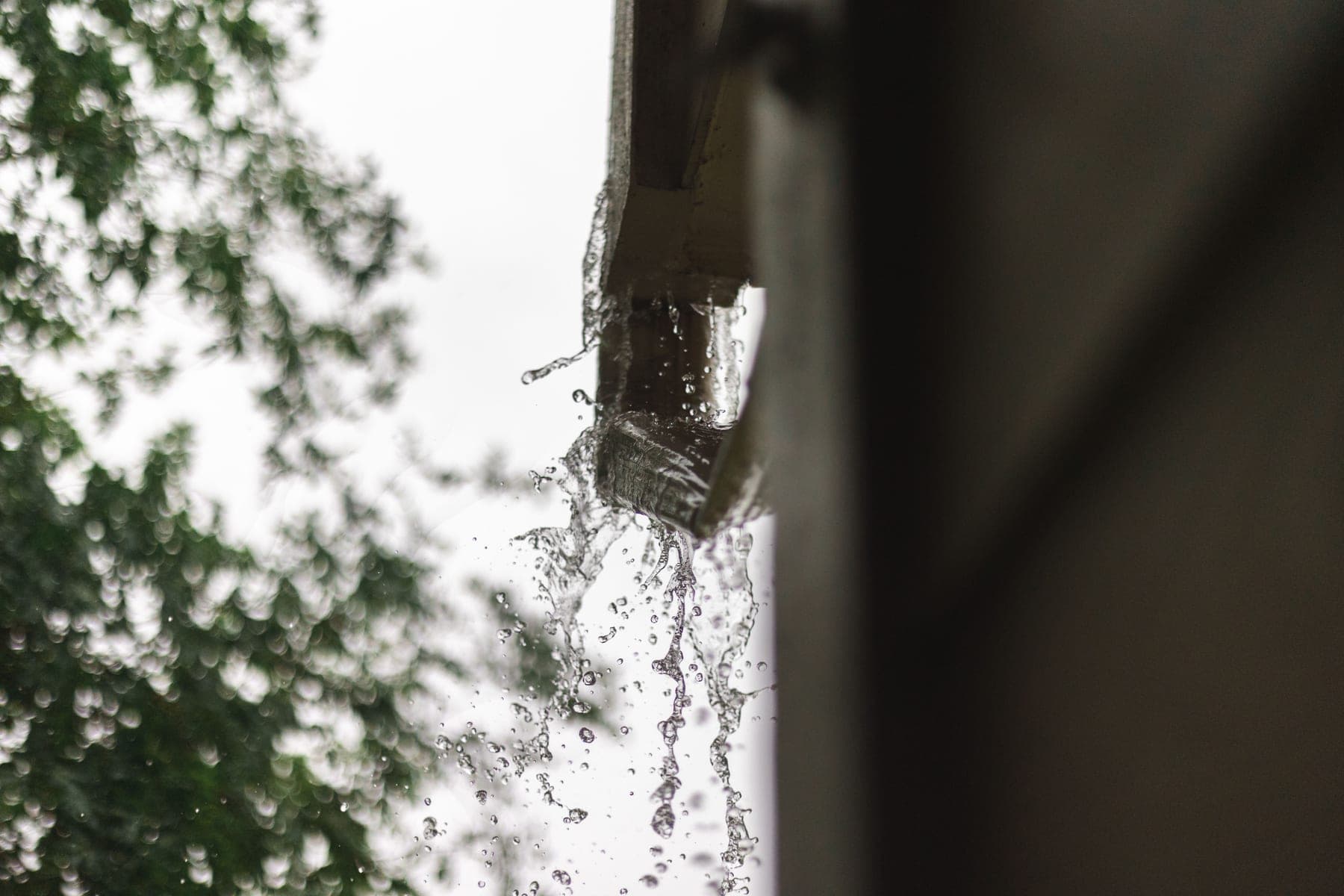
Months of dust and leaves sit on the roof and in the drains, and the first real storm finds every weak spot at once. Do the dry work in October and November: gutters, yard drains, roof flashing and the grading next to the foundation, which should slope away from the house so water drains off instead of pooling. Our fall home maintenance guide puts the whole season on one page.
If your lot takes runoff from a slope or the street, find your sandbags before you need them. OCFA says most of its fire stations have empty sandbags available and some have sand as well, and asks residents to bring a shovel. Some cities run their own programs: Tustin, for example, offers residents free fill-your-own sandbags at its maintenance yard and at neighborhood self-serve sites. Check your city's public works page before the forecast turns.
What do the marine layer and salt air do to a house?
The Weather Service's term is a marine push: ocean air moving in, much cooler and much more humid. In late spring and early summer it is a regular visitor in the coastal cities. For a house that means surfaces that stay damp until midday and, close to the beach, salt in that dampness. A FEMA (Federal Emergency Management Agency) technical bulletin says salt spray carried by onshore winds significantly speeds up the corrosion of metal. It is heaviest near the surf, drops off over the first 300 to 3,000 feet from the shoreline, and has been measured as far as 5 to 10 miles inland. Paint, window tracks, door hardware, light fixtures, garage door springs and the outdoor half of the air conditioner all show it first.
The habit that helps is cheap: rinse outdoor metal, screens and windows with fresh water, keep exterior paint and sealant intact, and look at the fasteners on gates and railings once a year. In a beach city, look over gutters, flashing and the AC condenser more often than the calendar above says.
How does hard water change the routine?
It adds three jobs. The Irvine Ranch Water District says the water it imports from the Colorado River and Northern California is typically hard, and recommends flushing the water heater once a year. Descale a tankless heater on the maker's schedule, and soak aerators and shower heads in vinegar when the flow drops. Our hard water guide explains what scale does and lists hardness by provider.
Outdoors, water cost is the driver. Irvine Ranch Water District publishes a month by month watering guide, and the pattern holds countywide: run times come down in fall, stay low through the wet months, and come back up in spring. Water rebates are in our Orange County home rebates guide.
OakTend turns a list like this into a plan for your own house. Add your home once, and it tracks what is due, reminds you, and keeps the dates, photos and receipts together.
Build your home's checklist, freeWhat about termites and earthquakes?
- Termites. The swarm months are in the calendar above. Our Orange County termite guide covers what to do if you find them.
- Earthquakes. Water heater straps loosen and get removed during repairs, so look once a year. If the house is older and sits on a raised foundation, our earthquake retrofit guide covers the Brace + Bolt grant and the work, and how old Orange County homes are shows the housing age in your city.
Guides for each system in your home
When a job on the list turns into a question, these go deeper.
- Water heater replacement cost: age, warning signs and replacement cost
- Hard water in Orange County: hardness by water provider and what it does
- Slab leak signs: how to spot a leak under the floor early
- Slab leak repair in Orange County: spot repair, reroute or repipe
- Repiping a house in Orange County: when a whole-house repipe makes sense
- Sewer line problems in Orange County: who owns the pipe to the street, and repairs
- HVAC replacement cost: repair or replace, and what it costs
- Roof replacement cost: lifespan by material and replacement cost
- Electrical panel upgrade cost: older panels and what an upgrade involves
- Termites in Orange County: drywood vs subterranean, and treatment
- Santa Ana wind and wildfire prep: defensible space, vents and red flag days
- Earthquake retrofit in Orange County: bolting and bracing older raised-foundation houses
- Building permits in Orange County: which jobs need a permit
- New homeowner checklist: your first week, month and year
Local notes by city: Anaheim, Irvine, Huntington Beach, Newport Beach, Santa Ana, Mission Viejo, Lake Forest, San Clemente and Fullerton, or every city on the Orange County hub.
As of September 2026. The first rain and the first wind event move from year to year. Roof, ladder, electrical and hot-water jobs carry real risk: do what you can from the ground, and follow your appliance manuals and your fire department's instructions.
Sources
- U.S. Department of Energy: Energy Saver 101, home cooling
Annual maintenance helps an air conditioner's efficiency and life, and a split system needs debris and leaves cleaned from the fan, compressor and condenser (opened 2026-10-09). - National Weather Service glossary: Santa Ana Wind
The definition of a Santa Ana wind. - National Weather Service glossary: Marine Push
A marine push replaces the air mass with ocean air that is much cooler and much more humid. - Orange County Fire Authority: sandbags
Most OCFA fire stations have empty sandbags, some also have sand, and residents should bring a shovel. - City of Tustin: free sandbags
Tustin offers residents free fill-your-own sandbags at its maintenance facility and at self-serve sites. - Irvine Ranch Water District: watering guide
The district publishes a month by month irrigation schedule. - ENERGY STAR heating and cooling maintenance checklist
Inspect, clean or change air filters once a month, and check cooling in spring and heating in fall before contractors get busy. - Orange County Fire Authority: smoke alarms and home escape plan
Test smoke alarms once a month, replace the battery every six months, and replace the alarm every 10 years. - U.S. Fire Administration: smoke alarms
Test every smoke alarm monthly; change a replaceable battery at least once a year; a sealed 10-year battery alarm gets replaced as a whole unit instead; replace any smoke alarm 10 years after its manufacture date. - UC IPM Pest Notes: Drywood Termites
Drywood termite swarmers fly during daytime hours in summer and fall. - UC IPM Pest Notes: Subterranean and Other Termites
The common subterranean species swarms in the afternoon in spring or fall on clear days after a soaking rain. - Orange County Assessor: Homeowners' Exemptions
The February 15 deadline for the full Homeowners' Exemption. - NOAA National Centers for Environmental Information: 1991-2020 monthly precipitation normals, Santa Ana John Wayne Airport (station USW00093184)
Monthly normals in inches: January 2.59, February 2.64, March 1.62, April 0.52, May 0.27, June 0.01, July 0.04, August 0.01, September 0.10, October 0.54, November 0.80, December 2.04. They sum to 11.18 a year, 8.89 of it December through March, 0.06 June through August. - National Weather Service Science and Technology Infusion Climate Bulletin: Santa Ana Events in California (Murphree, Szasz and Jones, 2018)
Santa Ana events are most common in October through March, and raise wildfire risk most when they occur during or soon after the end of the summer dry season. - FEMA: NFIP Technical Bulletin 8, corrosion protection for metal connectors and fasteners in coastal areas (June 2019)
Salt spray carried by onshore winds significantly accelerates the corrosion of metal, is greatest within 300 to 3,000 feet of the shoreline, and has been measured as far as 5 to 10 miles inland. - ENERGY STAR: heat and cool efficiently
Change the air filter when it looks dirty, and at least every 3 months. - Irvine Ranch Water District: water quality questions and answers
Water imported from the Colorado River and Northern California is typically hard, and the district recommends flushing the water heater once a year.