HVAC replacement cost in Orange County
Updated . By the OakTend team.
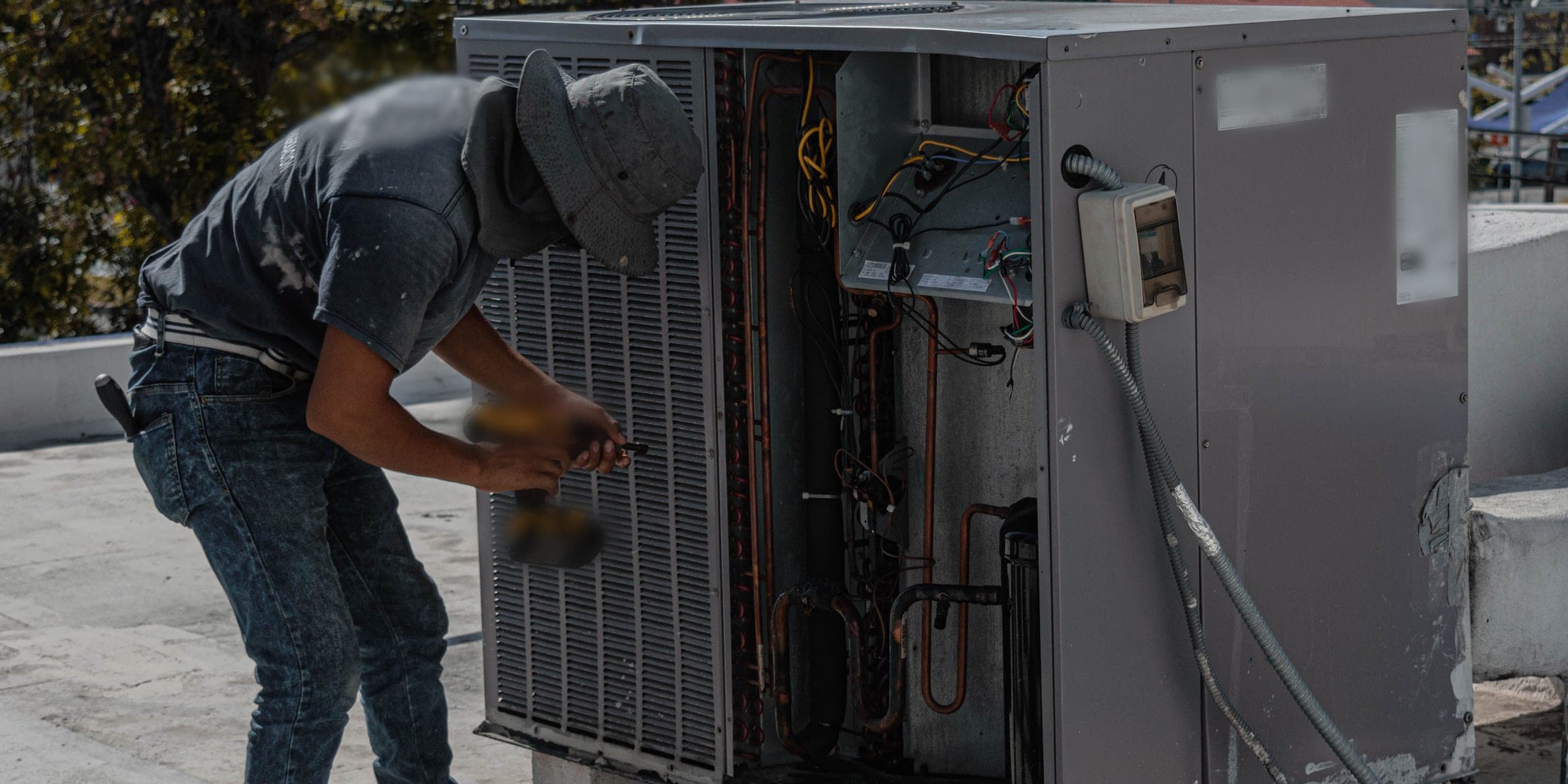
What it costs
Four things mostly decide where a quote lands:
- Size. The unit your home actually needs. An oversized system cycles inefficiently.
- Efficiency rating. Higher-efficiency equipment costs more upfront.
- Ductwork. Duct repair or replacement done at the same time is the biggest jump in price.
- Labor. Installing the system and charging the refrigerant.
A similarly sized system that reuses sound ducts is the least expensive version of the job. Before you spend anything, ENERGY STAR advises dealing with the big air leaks in the house and the ducts, because those are sometimes the real reason a system cannot keep up.
When repair beats replacement
InterNACHI, a home inspectors' association, publishes a life expectancy chart that lists 7 to 15 years for a central air conditioner, 10 to 15 years for a heat pump and 15 to 25 years for a furnace. ENERGY STAR lists a heat pump or air conditioner more than 10 years old, or a furnace or boiler more than 15, among the signs it is time to consider replacing.
A younger system with one contained problem, like a capacitor, blower motor or a refrigerant leak in an otherwise sound unit, is usually a repair. Replacement makes more sense past those ages, when the compressor or heat exchanger fails, or after repeat repairs.
What is different in Orange County
- Salt air on the coast. A FEMA (Federal Emergency Management Agency) technical bulletin on coastal construction says salt spray carried by onshore winds significantly accelerates the corrosion of metal, that the salt in the air is greatest within 300 to 3,000 feet of the shoreline, and that studies have found faster corrosion as far as 5 to 10 miles inland. The bulletin is about metal connectors and fasteners, but the same salt lands on an outdoor condenser's coil and cabinet. Near the beach, ask an installer about coastal protection for the outdoor unit and rinse it with fresh water now and then.
- Older houses. Most of the county's housing went up before 1980 (see how old Orange County homes are). In an older house, have the ducts looked at along with the equipment.
- Energy Code testing. Inland zip codes have an extra test on a new air conditioner; see the Title 24, Part 6 (the California Energy Code) question below.
Permits and home age by city
What each city's own pages say about heating and air conditioning work, with a link to where applications go. Where a city's page does not name the work, we say so rather than guess.
Fountain Valley
Built before 1980: 82%.
Replacing any mechanical or gas system needs a permit.
Garden Grove
Built before 1980: 77%.
Heating or air conditioning installations or alterations need a permit.
Santa Ana
Built before 1980: 74%.
Replacing any mechanical system needs a permit. The page does not name furnace or air conditioner swaps.
Huntington Beach
Built before 1980: 69%.
Furnace and air conditioner change-outs are express permits, filed with a CF1R energy compliance form.
Anaheim
Built before 1980: 65%.
The city's page does not name this work. Ask the building department before work starts.
Newport Beach
Built before 1980: 55%.
Replacing a furnace is an express permit you can apply for online.
Mission Viejo
Built before 1980: 52%.
The city's page does not name this work. Ask the building department before work starts.
Tustin
Built before 1980: 47%.
Mechanical projects go in through the portal. The page does not list exemptions.
Irvine
Built before 1980: 21%.
Most work regulated by code needs a permit, and this work is not on the city's list of exemptions.
| City | Built before 1980 | What the city says about this work |
|---|---|---|
| Fountain Valley | 82% | Replacing any mechanical or gas system needs a permit. Building permits page |
| Garden Grove | 77% | Heating or air conditioning installations or alterations need a permit. Building permit FAQ |
| Santa Ana | 74% | Replacing any mechanical system needs a permit. The page does not name furnace or air conditioner swaps. Permit FAQs |
| Huntington Beach | 69% | Furnace and air conditioner change-outs are express permits, filed with a CF1R energy compliance form. Express permitting |
| Anaheim | 65% | The city's page does not name this work. Ask the building department before work starts. Online Permit Center |
| Newport Beach | 55% | Replacing a furnace is an express permit you can apply for online. iPermit |
| Mission Viejo | 52% | The city's page does not name this work. Ask the building department before work starts. Client Self Service (Building Services) |
| Tustin | 47% | Mechanical projects go in through the portal. The page does not list exemptions. Citizen Self Service (Permits Process) |
| Irvine | 21% | Most work regulated by code needs a permit, and this work is not on the city's list of exemptions. Permits not required list |
Built before 1980: our sum of the 1979-and-earlier rows of Census table B25034, American Community Survey 5-year estimates for 2020 to 2024, rounded (Orange County overall: 57%). Estimates, not exact counts. Permit notes are what each city's own page said when we read it in September or October 2026. Where a page does not name the work, we say so rather than guess. Costa Mesa is not in this table; its online permit portal is linked on our Costa Mesa page.
City pages: Irvine, Mission Viejo, Yorba Linda, Newport Beach, or all Orange County cities.
Hiring and reading the bid
An HVAC replacement needs a permit, so it needs a licensed contractor. The heating and air conditioning license class is C-20, and you can check any license at cslb.ca.gov. The limit on the down payment is in our deposit rules guide. On top of the usual checks in is my contractor's quote fair?, an HVAC bid should:
- Name the equipment: type, brand, model, size and efficiency rating, for both the indoor and outdoor parts.
- List duct repair or replacement as its own line.
- Say who gets the permit and whether Energy Code testing, like refrigerant charge verification, is included.
Rebates
Utility and state rebates change often; what is open now is on our Orange County home rebates page.
Frequently asked questions
Should I get a heat pump instead of central AC?
A standard central air conditioner only cools, so you still need a separate furnace for heat. A heat pump does both jobs with one outdoor unit, moving heat in or out depending on the season, and tends to be more efficient in mild climates. It usually costs more upfront than a straight AC swap, but replaces two systems with one.
What is Title 24 and does it apply to an HVAC replacement?
Title 24 is California's building code, and Part 6 of it is the Energy Code. Permits applied for on or after January 1, 2026 fall under the 2025 Energy Code. The Energy Commission's compliance manual treats replacing a furnace, heat pump, central air conditioner or ducts as an alteration the code covers, and it requires refrigerant charge verification for heat pumps in every climate zone and for air conditioners in zones 2 and 8 through 15. By the Commission's zip code list, inland Orange County (Irvine, Santa Ana, Anaheim, Tustin and Mission Viejo zip codes, for example) is in zone 8, while coastal zip codes in Huntington Beach, Newport Beach, Costa Mesa and Fountain Valley are in zone 6.
Sources
- InterNACHI: standard estimated life expectancy chart for homes
Life expectancy of 7 to 15 years for a central air conditioner, 10 to 15 years for a heat pump, and 15 to 25 years for a furnace. - ENERGY STAR: when is it time to replace heating and cooling equipment
A heat pump or air conditioner more than 10 years old, or a furnace or boiler more than 15 years old, is a sign it is time to consider replacing. - ENERGY STAR: heat and cool efficiently
Deal with the big air leaks in the house and the duct system before investing in a new system. - FEMA: NFIP Technical Bulletin 8, corrosion protection for metal connectors and fasteners in coastal areas (June 2019)
Salt spray carried by onshore winds significantly accelerates the corrosion of metal, is greatest within 300 to 3,000 feet of the shoreline, and has been measured as far as 5 to 10 miles inland. - California Energy Commission: 2025 Building Energy Efficiency Standards
The 2025 Energy Code applies to permits applied for on or after January 1, 2026. - Contractors State License Board: what kind of contractor do you need
Anyone who contracts for a job that requires a building permit must hold a valid contractor license. - California Energy Commission: 2025 Single-Family Residential Compliance Manual, chapter 9 (additions, alterations and repairs)
Replacing an existing furnace, heat pump or central air conditioner, or extending or replacing a duct system, is an alteration covered by the Energy Code; refrigerant charge verification is required for heat pumps in all climate zones and for air conditioners in climate zones 2 and 8 to 15. - California Energy Commission: building climate zones by zip code
Coastal Orange County zip codes such as Huntington Beach (92646 to 92649), Newport Beach (92660 to 92663), Costa Mesa (92626, 92627) and Fountain Valley (92708) are in climate zone 6; inland ones such as Irvine (92618, 92620), Santa Ana (92701 to 92707), Anaheim (92801 to 92808), Tustin (92780, 92782) and Mission Viejo (92691, 92692) are in climate zone 8. Checked 2026-09-25. - City of Huntington Beach: express permitting
Express permits are simple single-family permits with no plan review; furnace and air conditioning units, new or change-outs, are submitted with the CF1R form. - City of Newport Beach: online permitting (iPermit)
Replacing a furnace is a single-scope express permit you can apply for online. - Contractors State License Board: licensing classifications
C-20 is the Warm-Air Heating, Ventilating and Air-Conditioning Contractor classification. - Contractors State License Board: contracts and binding agreements
A contract should say who gets the permits. - Contractors State License Board: finding the right contractor
Get at least three written bids based on identical scope, and do not automatically accept the lowest bid. - Census Reporter: U.S. Census Bureau American Community Survey 5-year estimates 2020-2024, table B25034 (year structure built), Orange County and nine cities
Share of housing units built before 1980 (our sum of the 1979-and-earlier rows, rounded): Orange County about 57 percent, Fountain Valley 82, Garden Grove 77, Santa Ana 74, Huntington Beach 69, Anaheim 65, Newport Beach 55, Mission Viejo 52, Tustin 47, Irvine 21.