Hard water in Orange County: a homeowner guide
Updated . By the OakTend team.
How hard is the water in Orange County?
The Water Quality Association sorts water by grains of hardness per gallon: under 1 is soft, 1 to 3.5 is slightly hard, 3.5 to 7 is moderately hard, 7 to 10.5 is hard, and over 10.5 is very hard. One grain per gallon is 17.1 parts per million (ppm), the same number as milligrams per liter, so very hard starts at about 180 ppm.
Against that scale, most of the county lands in the top band. Our water hardness by provider table lists what each provider printed in its latest water quality report, with a link to the report. If yours is not there, look for its annual water quality report (also called a Consumer Confidence Report) and find the row labeled "Hardness, total."
Why is Orange County water so hard?
Hardness is dissolved calcium and magnesium, and both of the county's main supplies carry plenty of it. The Orange County Water District says the 19 cities and water agencies over the groundwater basin in north and central county pump about 85 percent of their demand from it and buy the remaining 15 percent as imported water from the Metropolitan Water District. That imported water comes from the Colorado River and Northern California. South county sits outside that basin. The same district says about 600,000 people in the southern part of the county get most of their water from imported sources, and Santa Margarita Water District's report describes its supply as imported, treated surface water.
El Toro Water District puts it plainly: as Colorado River water travels through rock formations, it naturally picks up calcium and magnesium.
What does hard water do to a house?
The U.S. Geological Survey explains that when hard water is heated, as in a home water heater, solid deposits of calcium carbonate can form, and that this scale can reduce the life of equipment, raise the cost of heating water, lower the efficiency of electric water heaters, and clog pipes. Around the house that looks like:
- A tank water heater that rumbles or pops as it heats, because water is trapped under a layer of sediment at the bottom.
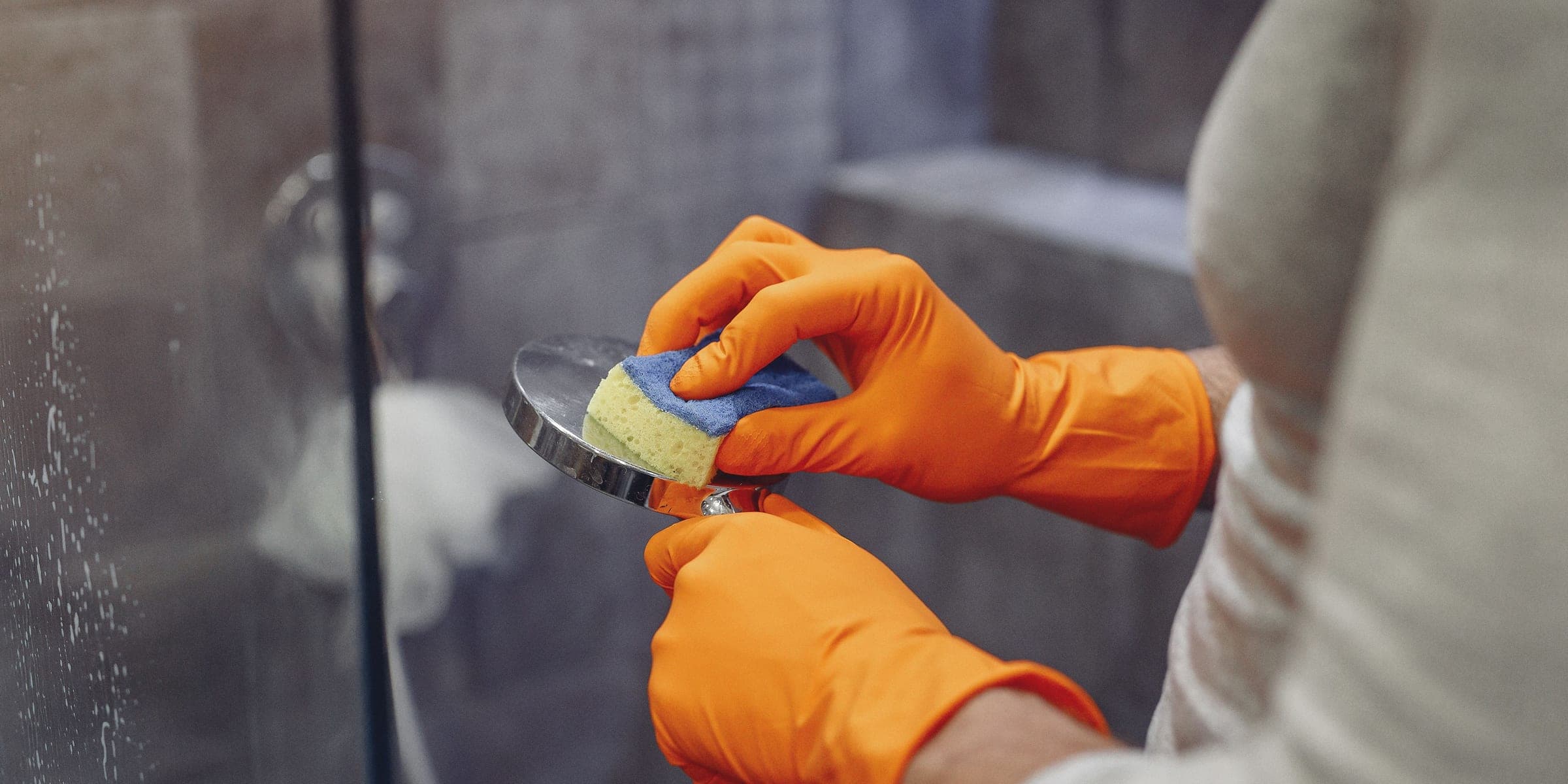
- White crust on faucet aerators and shower heads, and a slow drop in flow as the small openings close up.
- White spots on glasses and a chalky film on shower doors. Water districts describe this as mineral scale left behind when droplets dry.
- White particles that clog fixtures. The City of Tustin notes these may be bits of calcium carbonate scale coming from the water heater, and that a thermostat set too high can make scaling worse.
The low-cost habits are simple. Unscrew aerators and soak them in white vinegar once or twice a year, wipe glass and fixtures before droplets dry, and follow your dishwasher manual's hard water settings. Tankless water heaters need descaling on the schedule in the owner's manual, and in very hard water that is not a step to skip. If your supply pipes are already failing, our repipe guide covers replacing them.
How often should I flush my water heater?
The City of Tustin's water division says many manufacturers recommend periodic flushing to remove sediment, which can discolor water and make the heater less efficient, and it tells customers to follow the manufacturer's owner's guide. Our own maintenance schedule uses once a year as the default for a tank heater. In water as hard as ours, treat that as the floor unless your manual says otherwise.
One caution: on an old tank that has never been flushed, the drain valve can clog with sediment or fail to reseal afterward. In that case it is fair to leave it alone and start planning for a replacement instead. Our water heater replacement guide covers what that involves, and our 2026 rebates guide lists current water heater rebates.
OakTend keeps the age of your water heater, reminds you when a flush is due, and holds the manual and warranty so they are there when you need them.
Track your water heater, freeAre water softeners allowed in Orange County?
Yes, with conditions. California Health and Safety Code section 116785 allows a home softener only if it is regenerated off site (an exchange tank service), or if it drains to the sewer and meets a list of conditions, including regenerating on demand rather than on a clock and meeting a salt efficiency rating. Section 116786 lets a local agency limit or prohibit softeners that discharge to the sewer by ordinance, if it makes specific findings about salt in its wastewater.
We found no Orange County ordinance that bans them, though we did not check every agency, so ask your water or sewer provider before you buy one. We did find two districts asking customers not to use the salt kind. Irvine Ranch Water District and Yorba Linda Water District both say they discourage self-regenerating softeners, the type you add rock salt or potassium to, because the county recycles its wastewater and the brine is not removed in that process. Saltier recycled water is hard on the parks, school fields and golf courses irrigated with it. Both suggest an exchange tank service instead, so the salt never goes down your drain, and both point out that softening only the hot water lines saves money.
Is hard water safe to drink?
Yes. Irvine Ranch Water District says hardness does not affect the safety of the water, and El Toro Water District describes hard water as safe to drink and an aesthetic and household maintenance issue, not a health concern. The reasons to deal with it are your water heater, your fixtures and your patience with spotted glasses.
City pages with local water notes: Fountain Valley, Newport Beach, Yorba Linda and Irvine. Or see every city on the Orange County hub.
Provider statements as of September 2026, from each provider's water quality report or FAQ page, linked under Sources. General information, not plumbing, legal or health advice.
Sources
- Water Quality Association: glossary of terms, hardness
One grain per gallon equals 17.1 ppm as calcium carbonate; less than 1 grain per gallon is soft, 1 to 3.5 slightly hard, 3.5 to 7 moderately hard, 7 to 10.5 hard, and above 10.5 very hard. Checked 2026-10-09. - U.S. Geological Survey: Hardness of Water
Heated hard water forms scale that can shorten equipment life, raise heating costs and clog pipes. - Santa Margarita Water District: 2026 Water Quality Report
Santa Margarita's supply is imported, treated surface water from Metropolitan and from IRWD's Baker plant. - Yorba Linda Water District: water quality FAQ
The district discourages self-regenerating softeners because of salt in recycled water, and suggests exchange tank service. - Irvine Ranch Water District: water quality report and FAQ
Hardness does not affect safety, and the district discourages self-regenerating softeners because brine is not removed when wastewater is recycled. - El Toro Water District: water quality FAQs
The district's water is generally considered hard, Colorado River water picks up calcium and magnesium, and hard water is an aesthetic issue, not a health concern. - Orange County Water District: how water works in OC
Agencies over the groundwater basin pump about 85 percent of demand and import about 15 percent, and about 600,000 people in south county rely mostly on imported water. - City of Tustin: flushing out your water heater
Manufacturers recommend periodic flushing to remove sediment, and white particles may be calcium carbonate scale from the water heater. - California Health and Safety Code section 116785
The conditions under which a residential water softener may be installed, including off-site regeneration or demand control and a salt efficiency rating. - California Health and Safety Code section 116786
A local agency may limit or prohibit softeners that discharge to the sewer by ordinance, if it makes specific findings.